What Is Tokenization? Real-World Assets Explained
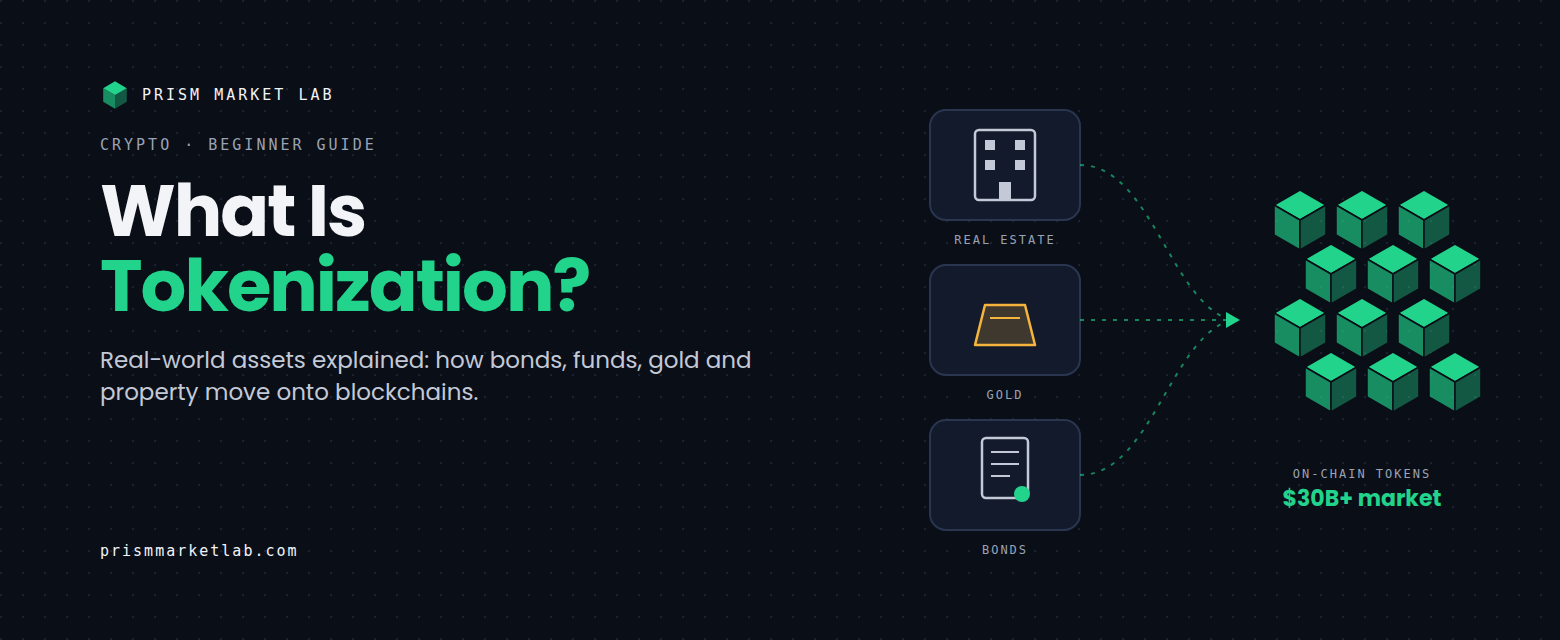
Bonds, money market funds and gold are moving onto blockchains, and some of the world's biggest asset managers are leading the way. Here's what tokenization means, how it works, why it's growing fast, and what you should know before buying a tokenized asset.
Tokenization means creating a digital token on a blockchain that represents ownership of a real-world asset, such as a government bond, a fund, gold or a building. The token can be held in a digital wallet, transferred in minutes and sometimes split into small pieces. In 2025 and 2026 tokenization grew from a niche experiment into a fast-growing market led by tokenized US Treasury funds from major asset managers.
Key Takeaways
- A tokenized asset is a blockchain record of ownership. The real asset still sits with a custodian, fund or company.
- The biggest category today is tokenized US government debt, not real estate.
- Tokens are only as good as the legal structure and the company behind them. Check what you actually own.
What Does Tokenization Mean?
Think about how you own a share or a bond today. Your ownership is recorded in a database run by a broker, bank or registrar. Moving it can take days, and only certain institutions can access it.
Tokenization puts that ownership record on a blockchain instead. Each token stands for a piece of the asset: one token might equal one share of a fund, one gram of gold, or a small slice of a building. Because blockchains run 24/7 and are shared between many parties, tokens can move between wallets quickly, at any time.
The assets themselves don't change. A tokenized Treasury fund still holds US government bonds; a tokenized gold token is still backed by gold in a vault. What changes is how ownership is recorded, transferred and used.
How Does Tokenization Work?
Most tokenized products follow a similar path:
- A real asset is held by a regulated company, fund or custodian, for example US Treasury bills held by a fund manager.
- A legal structure is created that links each token to a claim on that asset, often a fund share or a special company.
- Tokens are issued on a blockchain, such as Ethereum or another network, usually with rules built in, for example only verified investors can hold them.
- Investors buy tokens after passing identity checks (KYC), and hold them in a wallet.
- Income is paid out, such as interest from bonds, often automatically to token holders.
- Tokens can be redeemed for cash or transferred to other approved holders.
Step 2 matters most. A token is a digital receipt; the legal agreement behind it decides whether you truly own anything.
What Kinds of Assets Are Being Tokenized?
- US Treasuries and money market funds: the largest category. They give on-chain access to government bond yields.
- Private credit: loans to companies, packaged and tokenized for investors.
- Commodities: mainly gold, where each token is backed by physical metal.
- Stocks and ETFs: tokenized versions of listed shares, available in some regions.
- Real estate: buildings or rental income split into tokens. It gets a lot of attention, but it's still a small part of the market.
- Others: art, carbon credits and even royalties, mostly at an early stage.
Stablecoins are sometimes counted as tokenized dollars, but most market trackers list them separately.
How Big Is the Tokenization Market?
Growth has been fast. According to RWA.xyz data reported by Cointelegraph, the tokenized real-world asset market grew from about $5.8 billion at the start of 2025 to more than $30 billion by late April 2026. Tokenized US Treasuries alone rose from $3.9 billion to more than $15 billion over the same period (Cointelegraph).
That's still tiny compared with traditional finance, where the bond market is measured in trillions. But big names now have live tokenized products, including BlackRock and Franklin Templeton, which has helped turn tokenization from a crypto idea into a mainstream finance trend.
Why Is Tokenization Growing?
Faster settlement. Traditional trades can take a day or more to settle. Token transfers can settle in minutes, at any hour.
Using assets on-chain. A tokenized Treasury fund can be used as collateral, swapped or moved between platforms without leaving the blockchain. For crypto companies, it's a way to hold yield-earning assets instead of idle cash.
Smaller minimums. Splitting assets into tokens can make it possible to own smaller pieces, though many products are still limited to professional investors.
Transparency. Holdings and transfers can be visible on the blockchain, depending on the product.
Clearer rules. Regulation in several major markets has given institutions more confidence to launch products.
Tokenized Assets vs Stablecoins vs Crypto
- Bitcoin and Ethereum are native crypto assets. Their value comes from the network itself, and their prices swing a lot.
- Stablecoins are tokens designed to stay at $1. In the US, payment stablecoin issuers aren't allowed to pay holders interest.
- Tokenized real-world assets represent something outside the blockchain, like bonds or gold. A tokenized Treasury fund can pass on interest, which is one reason it's attractive.
The Risks You Should Understand
- Legal risk: does the token give you a real legal claim on the asset, or only a promise from the issuer? Read the terms.
- Issuer and custodian risk: if the company holding the asset fails or makes mistakes, your token may be affected.
- Smart contract risk: bugs or hacks in the token's code can cause losses.
- Liquidity risk: you may not always find a buyer, especially for niche assets like a single building.
- Access limits: many products are only for verified or professional investors in certain countries.
- Valuation risk: some assets, like private credit or property, are hard to price accurately.
- Regulatory change: rules for tokenized securities are still developing and differ by country.
How to Check a Tokenized Asset Before You Buy
- Who is the issuer? Look for a regulated, well-known company.
- What do you legally own? A fund share, a debt claim, or something weaker?
- Where is the real asset held, and who audits it?
- Can you redeem it for cash, how quickly, and at what cost?
- Which blockchain is it on, and has the smart contract been audited?
- Are you eligible to buy it in your country?
- What are the fees for buying, holding and redeeming?
Frequently Asked Questions
What is a real-world asset (RWA) in crypto?
It's an asset that exists outside the blockchain, such as a bond, fund, commodity or property, represented by a token on a blockchain.
Is tokenization the same as an NFT?
Not exactly. Both use tokens, but tokenized assets usually represent financial claims like fund shares, often in many identical units. NFTs are unique tokens often used for art or collectibles.
Can anyone buy tokenized Treasuries?
Often not. Many products are only for verified or professional investors in specific countries. Check eligibility first.
Are tokenized assets safe?
They carry the risks of the underlying asset plus extra risks from the issuer, the legal structure and the technology.
Why are big banks and asset managers interested?
Faster settlement, round-the-clock transfers, lower operating costs and access to crypto-native investors.
Bottom Line
Tokenization moves the ownership of real-world assets onto blockchains, making them faster to transfer and easier to use in digital finance. It's growing quickly, led by tokenized government bonds from major asset managers. Before you buy any tokenized asset, check who issues it, what you legally own, and how you can get your money out.
This article is for information only and is not financial advice. Tokenized assets involve risk, and availability depends on where you live.