

How to Start With Crypto: A Safe Beginner Guide for 2026
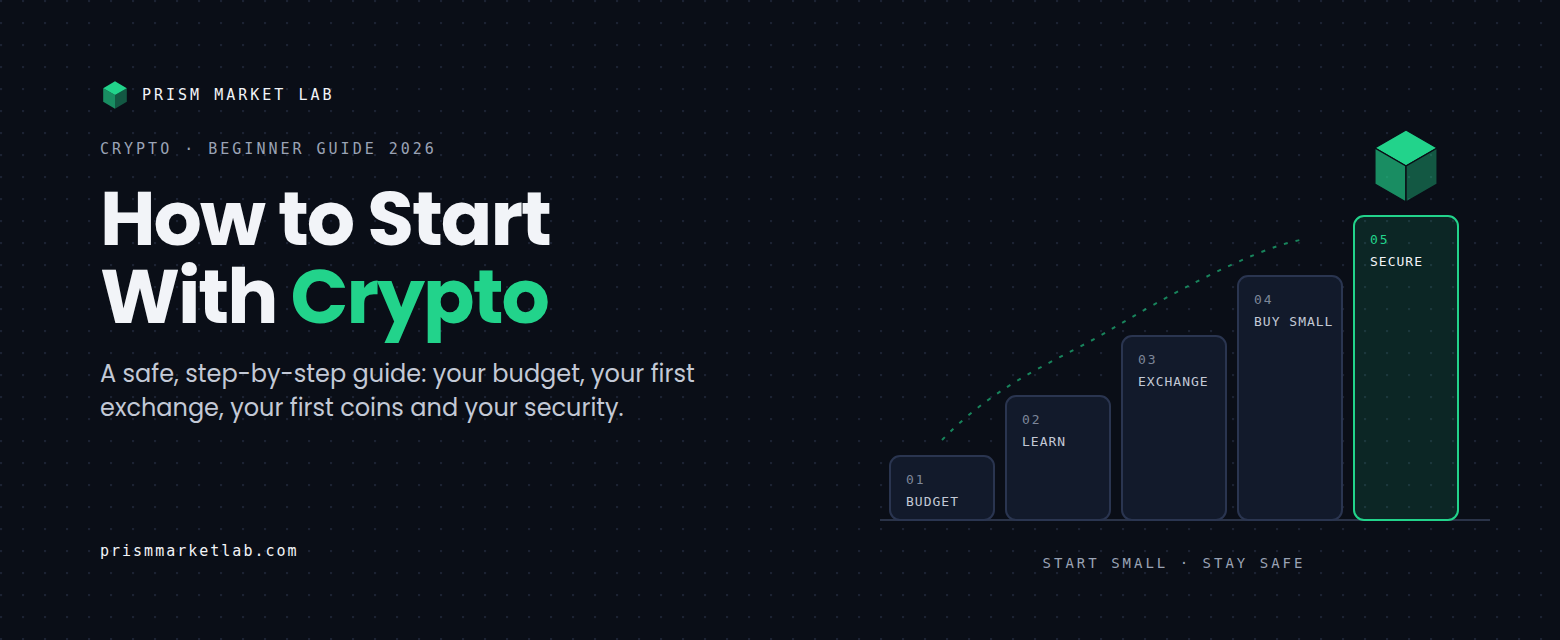
Thinking about buying your first crypto? This step-by-step guide shows you how to start safely: what to buy, where to buy it, how to store it, and the mistakes most beginners make.
To start with crypto safely, decide how much you can afford to lose, learn the basics, open an account on a regulated exchange, buy a small amount of a well-known coin, and protect it with strong security. Start small, go slowly, and never invest money you need for rent, bills or emergencies.
Key takeaways:
- Only invest money you could lose without changing your life.
- Use a regulated exchange, turn on two-factor login, and send a test transaction before any large transfer.
- Most beginners lose money through scams and panic, not through "picking the wrong coin."
Step 1: Decide why you want crypto and how much you can lose
Before you open any app, answer two questions honestly. Why do you want crypto? People start for different reasons: long-term saving in Bitcoin, sending money abroad with stablecoins, paying with a crypto card, or simply learning how it works. Your reason decides what you buy. Someone who wants to send money to family needs a stablecoin, not a new meme coin.
How much could you lose? Crypto prices can fall 50% or more in a few months, and that has happened many times. A simple rule many beginners use: start with an amount you would be fine seeing drop by half tomorrow. For many people that is the cost of a dinner out, not their savings. Keep an emergency fund in a normal bank account first. Crypto should come after that, not instead of it.
Step 2: Learn the five words you will see everywhere
You don't need to understand blockchain technology deeply to start, but these five terms will save you from confusion and costly mistakes:
- Exchange: an app or website where you buy and sell crypto with normal money.
- Wallet: where your crypto is stored. It can be inside the exchange or an app you control.
- Private key / recovery phrase: a list of 12–24 words that gives full control of a wallet. Whoever has these words owns the coins.
- Network: the blockchain a coin moves on, such as Bitcoin, Ethereum, Solana or Tron. Sending on the wrong network can mean losing the coins.
- Stablecoin: a coin designed to stay at $1, such as USDC or USDT.
If you remember only one thing from this guide, make it this: never share your recovery phrase with anyone, ever. No real company will ask for it.
Step 3: Choose a regulated exchange
For your first purchase, use a large, regulated exchange that is licensed in your country or region. Look for:
- A licence or registration with your country's financial regulator. Check the regulator's own website, not just the exchange's claims.
- Clear fees shown before you confirm a purchase.
- Easy withdrawals to your bank account.
- Strong security: two-factor authentication, withdrawal address whitelists, and login alerts.
- Real support you can actually reach, with recent reviews from users in your country.
Avoid platforms you found through a stranger on social media, a dating app or a messaging group. That is how many scams begin. We compare what to check in detail in How to Choose a Crypto Exchange.
Step 4: Verify your identity (KYC)
Regulated exchanges must check who you are before you can deposit. This process is called KYC, short for "Know Your Customer." You will usually need:
- A passport, national ID or driving licence
- A selfie or short video to prove it's really you
- Sometimes a proof of address, like a bank statement or utility bill
It usually takes a few minutes to a day. Use clear, well-lit photos and make sure your name matches exactly on every document. This is one of the most common reasons applications get delayed. More tips in What Is KYC?
Step 5: Buy your first crypto, small
Once your account is verified:
- Deposit money. A bank transfer is usually cheaper than a card payment.
- Choose what to buy. Most beginners start with Bitcoin, Ethereum or a stablecoin. These are the most established and widely supported.
- Check the total cost. Look at the fee and the amount of crypto you will actually receive before you press "Buy."
- Start small. You can always buy more later once you are comfortable.
What about smaller coins? New tokens can rise fast, but many lose most of their value or disappear completely. If you want to explore them, treat it as a small experiment, never as your main plan.
Buying regularly: many people buy a fixed amount every week or month instead of all at once. This is called dollar-cost averaging. It removes the stress of trying to buy at the "perfect" moment.
Step 6: Decide where to keep your crypto
You have two main options:
- Leave it on the exchange. Simple and fine for small amounts you might sell or trade. The risk: if the exchange is hacked, freezes withdrawals or fails, you may lose access.
- Move it to your own wallet. You control the coins with your own recovery phrase. A hot wallet is an app on your phone; a cold wallet is a small offline device that is safer for long-term savings.
A common setup for beginners: small amounts on the exchange, savings in a wallet you control. Before moving anything, read Hot Wallet vs Cold Wallet. When you send crypto for the first time: send a tiny test amount, check that it arrived, and only then send the rest. Always double-check the address and the network.
Step 7: Lock down your security
Most beginner losses come from security mistakes, not price drops. Take 15 minutes to:
- Use a unique, long password for your exchange and email, and a password manager.
- Turn on two-factor authentication with an authenticator app, not SMS if you can avoid it.
- Write your recovery phrase on paper and store it somewhere safe. Never photograph it or store it in your email, notes app or cloud.
- Turn on withdrawal address whitelisting if your exchange offers it.
- Be suspicious of anyone who contacts you first about crypto, especially on Telegram, WhatsApp, Instagram or dating apps.
Step 8: Know the rules for taxes
In many countries, selling, swapping or spending crypto can create a tax bill, even small amounts. Keep a record of every purchase and sale. Most exchanges let you download your transaction history. Rules differ a lot between countries, so check your local tax authority's guidance or ask a tax adviser. Our Crypto Taxes for Beginners guide explains the basics.
The 5 most common beginner mistakes:
- Investing too much too fast after seeing a price jump on social media.
- Panic selling after the first big drop. Crypto prices move a lot; decide your plan before you buy.
- Trusting "guaranteed returns." No real investment guarantees profit. This is the number one sign of a scam.
- Sending on the wrong network without a test transaction.
- Sharing the recovery phrase with a fake "support agent."
Frequently Asked Questions
How much money do I need to start with crypto?
Very little. Most exchanges let you buy from around $10–20. The right amount is what you can afford to lose.
Which crypto should a beginner buy first?
Most beginners start with Bitcoin, Ethereum or a stablecoin because they are the most established. This isn't financial advice; do your own research and consider your goals.
Is it safe to keep crypto on an exchange?
For small amounts on a large, regulated exchange, many people do. For larger, long-term amounts, a wallet you control removes the risk of the exchange failing.
Can I lose all my money in crypto?
Yes. Prices can fall sharply, projects can fail, and scams are common. Only invest what you can afford to lose.
Do I need to pay tax on crypto?
In many countries, yes, when you sell, swap or spend it. Rules differ by country, so check locally.
Bottom Line Starting with crypto is easier than ever, but safety comes first. Set a budget you can afford to lose, use a regulated exchange, protect your account and recovery phrase, start small, and learn as you go. Slow and careful beats fast and lucky.
This article is for information only and is not financial advice. Crypto assets are risky and you can lose money.