What Is iGaming? The Online Gaming Industry Explained
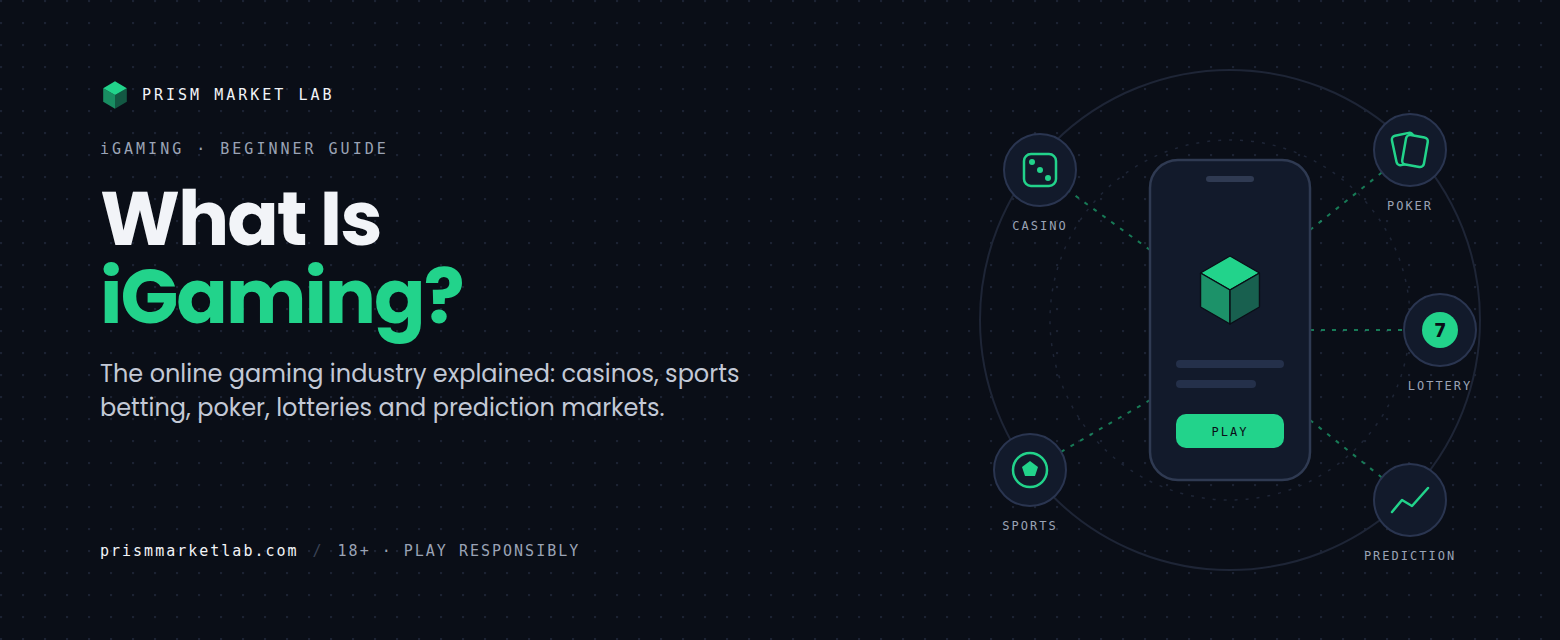
iGaming is everything you can bet on or play for money online: casinos, sports betting, poker, lotteries and more. Here's how the industry works, who the main players are, how it's regulated, and the trends shaping it in 2026.
iGaming means gambling and gaming for money over the internet: online casinos, sports betting, poker, bingo, lotteries and, more recently, prediction markets. It's a global industry made up of operators (the sites players use), suppliers (game studios, betting platforms, payment companies) and regulators who license and supervise them. Rules differ a lot from country to country, so what's legal for you depends on where you live.
Key Takeaways:
- iGaming covers several very different products, from slot games to sports betting and prediction markets.
- Behind every site is a chain of companies: the operator, game suppliers, platform providers, payment providers and affiliates.
- Regulation is local. A licence in one country doesn't make a site legal everywhere.
What does "iGaming" mean?
The "i" stands for internet. Before online gambling existed, betting happened in physical casinos, betting shops and lottery kiosks. iGaming is the online version: any game or bet where you risk money through a website or app, usually hoping to win more. People in the industry use "iGaming" instead of "online gambling" because it sounds more neutral, and because the industry now includes products that sit between gambling, gaming and finance.
The Main Types of iGaming:
Online casino. Digital versions of casino games: slots, roulette, blackjack, baccarat and poker tables. There are two main styles:
- RNG games, where a computer program (a random number generator) decides the result.
- Live casino, where real dealers run the game from a studio and you watch on video.
Sports betting. Betting on the result of sports events, either before the match or live while it's being played. Odds show how likely the bookmaker thinks each outcome is and how much you'd win.
Poker. Online poker is different from most casino games because you play against other players, not against the house. The site takes a small fee from each game.
Lottery and bingo. Online versions of national lotteries, lottery betting and bingo rooms.
Esports betting. Betting on professional video game competitions like Counter-Strike, League of Legends or Dota 2. Crypto casinos. Sites that accept cryptocurrency for deposits and withdrawals. Some are licensed; many operate from offshore jurisdictions. Read our Crypto Casino Safety Checklist before using one.
Prediction markets. Platforms where people trade contracts on the outcome of real-world events, such as elections, sports or economic data. Whether they count as gambling or as financial trading is one of the biggest legal debates in the industry right now. More in What Are Prediction Markets?
How the iGaming industry works behind the scenes
When you open a betting app, you see one brand. Behind it, several types of companies work together:
- Operators (B2C): the brand you play with. They hold the licence, manage your account, handle payments and are responsible for protecting you.
- Game studios (B2B): companies that design slot games, live casino games and other content. One studio's games often appear on hundreds of different sites.
- Platform providers: the software that runs the site: player accounts, wallets, bonuses and reporting.
- Sports data and odds providers: live scores, statistics and the odds you see on screen.
- Payment providers: card processors, e-wallets, bank transfer services and, increasingly, crypto and stablecoin payment companies.
- Affiliates: websites, streamers and influencers who send new players to operators in exchange for a commission.
- Regulators and testing labs: authorities that license operators, and independent labs that test whether games are fair.
In industry language, "B2C" means business-to-consumer (the operator) and "B2B" means business-to-business (the suppliers).
How do iGaming companies make money?
In casino games, every game has a built-in mathematical edge for the house. Over many games, the operator keeps a small percentage of everything players bet. This is why the RTP (return to player) of a slot is always below 100%. In sports betting, the bookmaker builds a margin into the odds, so the total probabilities add up to slightly more than 100%. In poker and prediction markets, the platform usually charges a fee per game or per trade, because players compete with each other. The important takeaway for players: over time, the maths favours the operator. iGaming should be treated as paid entertainment, not as a way to make money.
How is iGaming regulated?
There is no single global rule. Each country, and sometimes each state or province, decides:
- Whether online gambling is allowed at all
- Which products are allowed (for example sports betting but not online casino)
- Who can get a licence and under what conditions
- Player protection rules: age checks, deposit limits, self-exclusion and advertising limits
- Taxes operators must pay
Some well-known regulators include the UK Gambling Commission, the Malta Gaming Authority, the Curaçao Gaming Authority, and local regulators in places like Ontario (Canada), many US states, and Brazil, which opened a regulated market in 2025. A licence from one regulator doesn't automatically make a site legal everywhere. We explain the differences in Online
Gambling Licences Explained.
Big trends shaping iGaming in 2026
- Prediction markets go mainstream. Platforms like Kalshi and Polymarket have attracted billions in trading, especially around big sports events, and are fighting legal battles with US states over whether they're gambling or financial products.
- More countries regulate. Governments are moving from "grey markets" to licensed, taxed markets with stricter rules. Brazil's regulated market and Curaçao's reform of its licensing system are two big examples.
- Crypto and stablecoin payments. More operators accept crypto, and regulators are paying closer attention to how these payments are checked for fraud and money laundering.
- Stronger player protection. Affordability checks, deposit limits, stricter bonus rules and advertising restrictions are spreading in regulated markets.
- AI everywhere. Operators use AI for fraud detection, personalised offers and spotting problem gambling behaviour early, which raises both opportunities and ethical questions.
How to stay safe as a player
- Check the licence on the regulator's own website, not just the logo at the bottom of the page.
- Set a budget before you play and treat it as the cost of entertainment.
- Use deposit limits and time reminders that licensed sites must offer.
- Read bonus terms, especially wagering requirements, before accepting any offer.
- Never chase losses. If gambling stops being fun, take a break and use self-exclusion tools.
- Get help early if you feel you're losing control. Most countries have free, confidential gambling support services.
Frequently Asked Questions
What does iGaming stand for?
"Internet gaming." It refers to online casino games, sports betting, poker, lotteries and similar products played for money online.
Is iGaming the same as gambling?
Mostly, yes. iGaming is the industry term for online gambling, but it also includes newer products like prediction markets that some regulators treat differently.
Is iGaming legal?
It depends on your country, and sometimes your state or province. Always check your local rules and use licensed operators.
What is the difference between B2B and B2C in iGaming? B2C companies (operators) serve players directly. B2B companies supply games, platforms, data and payments to those operators. Can you make money from iGaming? As a player, the odds favour the operator over time. Many people work in the industry itself, in marketing, compliance, payments, product and technology.
Bottom Line
iGaming is a large, fast-changing online industry that includes casinos, sports betting, poker, lotteries and prediction markets. Behind every site is a network of operators, suppliers, payment companies and regulators. If you play, use licensed sites, set limits, and treat it as entertainment, not income. This article is for information only. Gambling involves risk. Play responsibly; 18+ or the legal age where you live.