

Do You Pay Tax When You Spend Crypto With a Card?
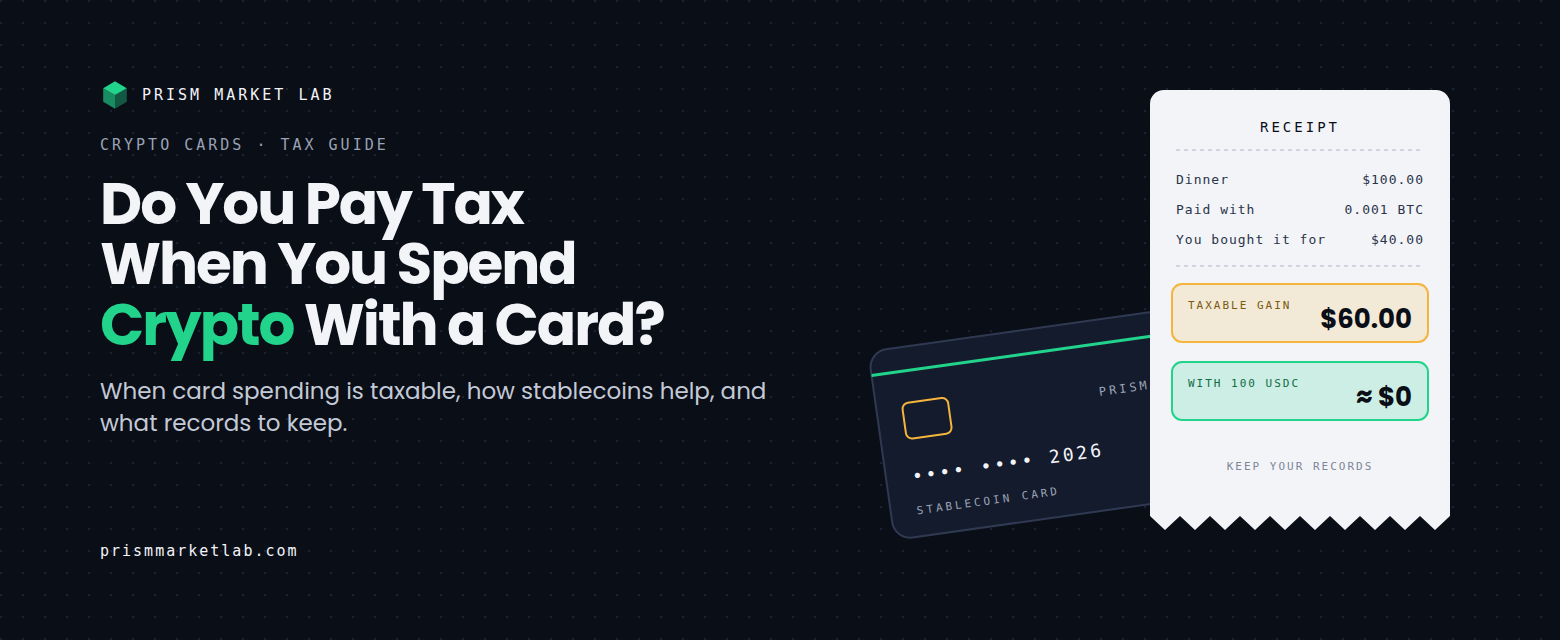
Every time you tap a crypto card, you may be selling crypto in the eyes of the tax office. Here's when card spending is taxable, why stablecoins make life easier, how cashback is treated, and the simple records that save you stress later.
In many countries, yes, it can be. When you pay with a crypto card, your crypto is usually sold for regular money at that moment, and tax offices like the US IRS and the UK's HMRC treat that sale as a "disposal." If your crypto went up in value since you bought it, you may owe tax on that gain, even on a coffee. Spending stablecoins usually creates little or no gain, which is why they make card spending much simpler.
Key Takeaways
- A card payment with crypto is often treated like selling that crypto, so gains can be taxable.
- Spending Bitcoin or other volatile coins can create a tax bill; spending stablecoins usually creates a tiny one or none.
- Keep your card transaction history. Rules differ by country, and many are changing.
Why Spending Crypto Can Be Taxable
Most tax authorities don't treat crypto as money. They treat it as property or an asset, like shares or gold. In the US, this has been the IRS's position since 2014. That creates a simple but surprising rule: when you swap an asset for something else, you have "disposed" of it. So when your crypto card turns $50 of Bitcoin into dollars to pay for dinner, you have technically sold $50 of Bitcoin. If you bought that Bitcoin for less than $50, the difference is a capital gain. If you bought it for more, it's a capital loss.
A Simple Example Imagine this:
- In January you bought 0.001 BTC for $40.
- In October you use your crypto card to pay a $100 restaurant bill, and the card sells exactly 0.001 BTC to cover it.
- Your gain is $100 − $40 = $60.
That $60 may be taxable as a capital gain, depending on your country and your total gains for the year. You didn't "cash out" in your mind; you just paid for dinner. But for tax purposes, you sold crypto. Now imagine the same dinner paid with 100 USDC that you bought for $100. Your gain is $0, or a few cents either way. That's why stablecoins have become the default for card spending.
Why Stablecoins Make It Easier (But Not Always Tax-Free)
Stablecoins are designed to stay at $1, so buying and spending them rarely creates a meaningful gain or loss. In practice:
- Fewer and smaller gains to calculate.
- Simpler records, because the value barely changes.
- Less risk of a surprise bill after a strong market year.
But there's a catch: the step where you swap Bitcoin or Ethereum into a stablecoin is usually a taxable disposal itself. Moving profits into USDC first doesn't avoid the tax on those profits; it just happens at the swap instead of at the shop.
And technically, many countries still count every stablecoin disposal as a taxable event, even with zero gain. The UK's tax office, HMRC, opened a call for evidence in March 2026 asking whether stablecoins used for everyday payments should be treated differently, because the current rules create paperwork for transactions with no real profit (CryptoUK).
Is There a Small-Purchase Exemption?
In the US, not yet. There's an active debate about a "de minimis" rule that would exempt small crypto payments, and several bills have been introduced, but none has become law. Every crypto disposal is still a taxable event, whatever its size (CoinTracking). Some proposals focus only on stablecoins. Other countries take different approaches. Some exempt gains on crypto held longer than a set period, some have yearly tax-free allowances for capital gains, and some tax crypto as income. Because rules vary so much, always check your own country's tax office guidance.
What About Cashback and Rewards?
Many crypto cards pay rewards, often in crypto. How these are taxed depends on how you earn them:
- Cashback for spending is often treated like a discount or rebate, similar to cashback on a regular card, and in many cases is not taxed when you receive it (CoinLedger).
- Rewards without spending, such as sign-up bonuses or staking rewards for holding the card's token, are more likely to count as income.
- When you later sell or spend your rewards, that's usually a disposal, so any increase in value since you received them can be a gain.
The value at the time you receive a reward often becomes its "cost" for later calculations, so keep a record of it.
Crypto Debit Cards vs Crypto Credit Cards The type of card matters:
- Crypto debit cards spend your crypto directly, so each purchase can be a disposal.
- Crypto-backed credit cards let you borrow against your crypto without selling it. Because nothing is sold when you pay, there's usually no disposal at the moment of purchase. But if the platform sells your collateral to repay the loan, for example after a price drop, that sale can be taxable.
What the Tax Office Can See
Reporting is getting stricter. In the US, crypto brokers now report customer transactions to the IRS on a new form, 1099-DA. Many other countries are joining an international reporting standard for crypto (CARF) that shares account information between tax authorities. In short: assume your card activity is visible, and report it correctly.
How to Keep Your Crypto Card Taxes Simple
- Spend stablecoins, not volatile coins, for everyday purchases.
- Top up in stablecoins directly when possible, so there's no extra swap.
- Download your transaction history from the card app every month or quarter.
- Use crypto tax software that connects to your exchange and card to calculate gains automatically.
- Record the value of rewards when you receive them.
- Keep cards and long-term savings separate, so you don't accidentally sell coins you meant to hold.
- Talk to a tax adviser if you spend large amounts or use several platforms.
Frequently Asked Questions
Do I pay tax every time I use a crypto card?
In many countries, each purchase with crypto is a disposal. You only owe tax if there's a gain and your total gains exceed any allowance where you live.
Is spending stablecoins taxable?
It's usually still a disposal, but because the value barely changes, the gain is typically zero or tiny.
Is crypto cashback taxable?
Cashback earned from spending is often treated as a rebate and not taxed on receipt, but selling the reward later can create a gain. Rules vary by country.
Can I avoid tax by using a crypto credit card?
Borrowing against crypto isn't a sale, so purchases usually aren't disposals. But if your collateral is sold, that can be taxable, and borrowing carries its own risks.
Do crypto card companies report to the tax office?
Increasingly, yes. US brokers report on Form 1099-DA, and many countries are adopting international crypto reporting rules.
Bottom Line
A crypto card makes spending easy, but each payment may count as selling crypto. Spending stablecoins keeps gains close to zero, keeping records keeps you prepared, and checking your local rules keeps you safe. Rules are changing fast, so review them once a year. This article is for information only and is not tax advice. Tax rules differ by country and change often; consult a qualified tax adviser.