

Online Gambling Licences Explained: What They Mean and How to Check One
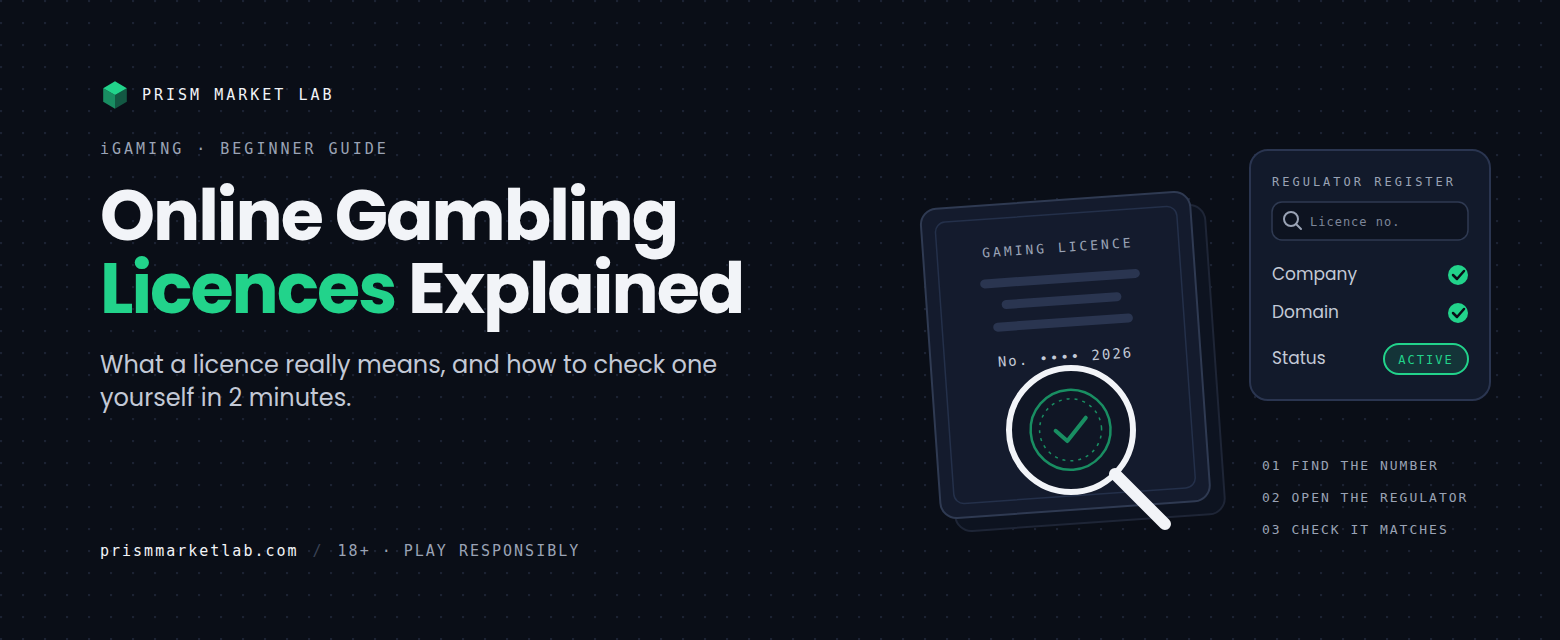
That small licence logo at the bottom of a casino site matters more than any bonus. Learn what a gambling licence is, how the main licences differ, what changed in Curaçao, and how to check a licence yourself in two minutes.
A gambling licence is official permission from a government regulator for a company to offer gambling. It means the operator has passed checks and must follow rules on fair games, player funds, anti-money-laundering and player protection. Licences are not all equal: a licence from your own country's regulator usually gives you the strongest protection. You can check any licence in about two minutes on the regulator's official website.
Key Takeaways
- A licence is the single most important thing to check before you deposit.
- Always confirm it on the regulator's own website. A logo can be copied.
- A licence from one country doesn't make a site legal in yours.
What is a Gambling Licence?
When a company wants to run an online casino or betting site legally, it applies to a regulator. Before granting a licence, the regulator usually checks:
- Who owns and runs the company, and whether they're suitable
- Where the money comes from, to prevent money laundering
- That games are fair, usually through tests by independent labs
- How player funds are protected
- Responsible gambling tools, such as deposit limits and self-exclusion
- Technical security of the platform and player data
After that, the operator must keep following the rules, pay fees and taxes, and report to the regulator. If it breaks the rules, it can be fined or lose its licence.
Why a Licence Matters to You as a Player?
With a licensed operator, you have:
- Someone to complain to if the operator refuses a fair withdrawal or breaks its own terms
- Tested games, so results aren't secretly manipulated
- Rules on bonuses and advertising, which are stricter in many regulated markets
- Protection tools: limits, time-outs, self-exclusion and age checks
- More secure handling of your money and personal data
Without a licence, you have none of this. If an unlicensed site refuses to pay you, there's usually nothing you can do.
The Main Types of Licences:
Local (national or state) licences. Many countries license operators that serve their own residents, such as the UK, Ontario in Canada, many US states, and several European countries. Brazil opened its regulated market in 2025, and licensed operators there use the .bet.br web address. A local licence usually gives the strongest protection, because the regulator is in your country and enforces local consumer rules.
International licences. Some jurisdictions license operators that serve players in many countries. The best known are:
- Malta Gaming Authority (MGA): one of the most respected international regulators, with strict compliance and player protection rules. Common among European operators.
- UK Gambling Commission (UKGC): technically a local licence for British players, but known worldwide as one of the strictest regulators.
- Curaçao Gaming Authority (CGA): historically the most common licence for international and crypto casinos. It has been completely reformed (see below).
- Others: including the Isle of Man, Gibraltar, Kahnawake (Canada) and Anjouan. Standards vary widely between them.
What Changed With Curaçao Licences
For years, Curaçao used a system where four "master licence" holders could issue sub-licences to many operators, with light supervision. It was cheap and fast, and it had a weak reputation for player protection. That system has ended. Under Curaçao's new gambling law, known as the LOK, the Curaçao Gaming.
Authority now issues licences directly to operators, and the old master and sub-licences have expired (Tetra Consultants). Licences now come in two main types: B2C for companies that serve players and B2B for suppliers, and they stay valid only as long as the operator keeps complying (SOFTSWISS). The new regime also expects stronger KYC, anti-money-laundering and responsible gambling standards (Mondaq).
What this means for you: a Curaçao licence today should be a direct CGA licence you can verify on the CGA's official register. If a site still shows an old-style sub-licence or a licence number you can't find, treat it as a warning sign.
How to Check a Licence in 2 Minutes:
- Scroll to the bottom of the casino or betting site. Find the licence statement: the regulator's name, the company name and a licence number.
- Note the exact company name and licence number.
- Go to the regulator's official website yourself. Type the address manually rather than clicking the logo on the casino site, because fake logos can link to fake pages.
- Search the public register for the company name or licence number.
- Check that the details match: the same company, an active status, and the website domain listed under that licence.
- Check where it's valid. Make sure the licence covers your country, and that your country doesn't require a local licence.
If you can't find the licence, the details don't match, or the status is suspended or revoked, don't deposit.
Red Flags Around Licences:
- No licence information at all on the site
- A logo that isn't clickable, or links to a page that isn't on the regulator's real domain
- A licence number that doesn't appear on the regulator's register
- A different company name on the licence than in the site's terms and conditions
- Vague wording like "licensed and regulated" with no regulator or number
- Your country is listed as restricted in the terms, but the site lets you sign up anyway
- Pressure to deposit in crypto only to avoid "verification"
Licensed Doesn't Mean Risk-Free
A licence lowers your risk, but it doesn't remove it:
- The house edge still means the operator wins over time.
- Bonus terms can still be strict, so read wagering requirements.
- International licences may not follow your country's consumer rules.
- Gambling can become harmful for anyone. Use limits and take breaks.
Frequently Asked Questions
What is the best gambling licence?
The one from your own country's regulator usually protects you most. Internationally, the UK Gambling Commission and Malta Gaming Authority are known for strict standards.
Is a Curaçao licence safe?
Curaçao reformed its system and now issues licences directly through the Curaçao Gaming Authority. Verify the licence on the CGA register, and remember it may not be valid in your country.
How do I check if a casino is licensed?
Find the regulator and licence number at the bottom of the site, then search for them on the regulator's official website and check that the details match.
Can a licensed casino refuse to pay me?
It can if you broke its terms, for example bonus rules or using multiple accounts. If you think it's unfair, complain to the operator first, then to the regulator or an approved dispute service.
Is it legal to play on a site licensed in another country?
It depends on your country's laws. Some countries only allow locally licensed operators.
Bottom Line
A gambling licence is your main protection when you play online. Check it yourself on the regulator's official website, make sure it covers your country, and walk away if anything doesn't match. A real licence is worth more than any welcome bonus. This article is for information only and is not legal advice. Gambling involves risk. Play responsibly; 18+ or the legal age where you live.